

HC supplies copper nickel flanges for seawater, shipbuilding, offshore and marine piping systems.Available types include weld neck flanges, slip on flanges, socket weld flanges, threaded flanges, blind flanges and composite copper nickel flanges with carbon steel backing flanges.
Our CuNi flanges are available in common marine and industrial standards including DIN 86037, DIN 86033, EEMUA 234 and ASME B16.5, with options for CuNi 90/10 and CuNi 70/30 materials.
- CuNi 90/10
- CuNi 70/30
- ASME B16.5
- DIN 86033
- DIN 86037
- EEMUA 234
- CL150
- CL300
- PN10
- PN16
Your Reliable Copper Nickel Flanges Manufacturer
HC manufactures and supplies copper nickel flanges for shipbuilding, offshore platforms, seawater cooling lines, desalination systems and industrial marine pipelines. We focus on correct material selection, accurate flange dimensions and practical support for project purchasing teams.
What We Can Supply
- Weld neck, slip on, socket weld, threaded, blind and composite copper nickel flanges
- CuNi 90/10 and CuNi 70/30 flange materials for seawater and marine service
- Carbon steel backing flanges for composite flange assemblies
- DIN 86037, DIN 86033, EEMUA 234 and ASME B16.5 flange options
- ASME Class 150, Class 300, PN10 and PN16 pressure ratings
- Flat face and raised face sealing surface options
- Standard products and customized production according to drawings
- Export packing suitable for long-distance sea or air shipment
Support for Engineers, Buyers and Shipyards
Copper nickel flange selection is not only about matching a size. In marine piping systems, the flange type, pressure rating, pipe schedule, sealing face, bolt hole arrangement and material grade all affect installation and long-term performance.
HC helps customers check flange specifications before production, especially for projects involving copper nickel pipes, stub ends, loose backing flanges and mixed DIN, EEMUA or ASME requirements. If you have a flange schedule, drawing or pipe specification, our team can review the details and recommend a suitable supply solution.
Marine-Grade Material Focus
Our copper nickel flanges are supplied for seawater systems where corrosion resistance is essential. CuNi 90/10 is widely used for standard seawater service, while CuNi 70/30 is available for more demanding operating conditions.
Composite Flange Cost Advantage
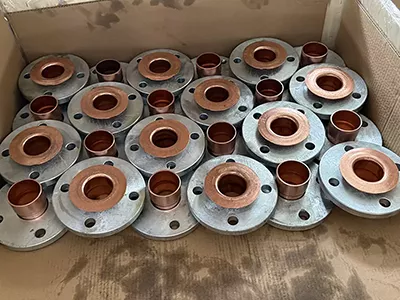
For many low-pressure marine pipelines, composite flanges provide an economical solution. The copper nickel collar or stub end contacts the medium, while the carbon steel backing flange provides bolting force without touching seawater.
Clear Documentation
Material certificates, dimensional inspection, marking, packing details and project-specific documents can be prepared when required, helping customers manage approval, installation and receiving inspection more efficiently.
Copper Nickel Flange Types We Supply
HC offers copper nickel flanges for different piping designs, pressure classes and installation requirements. Products can be supplied according to standards, project specifications or customer drawings.
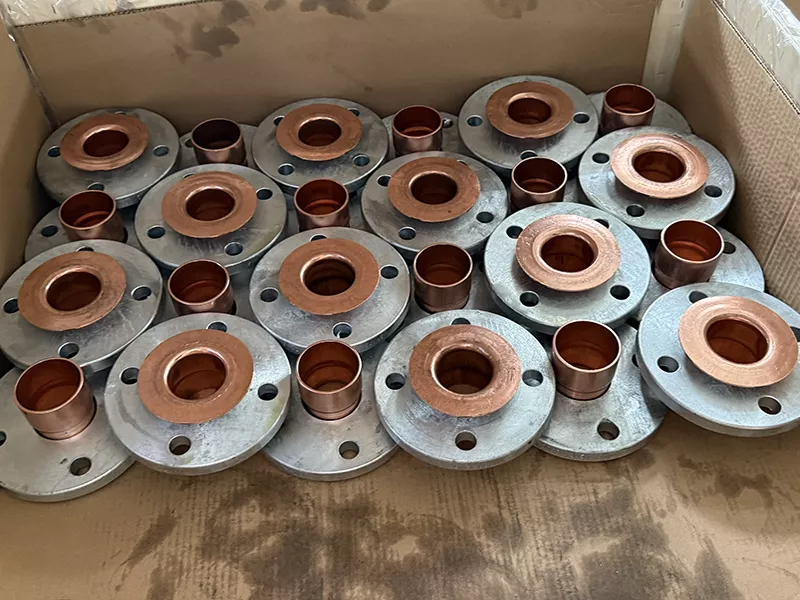
Composite Weld Neck Flange
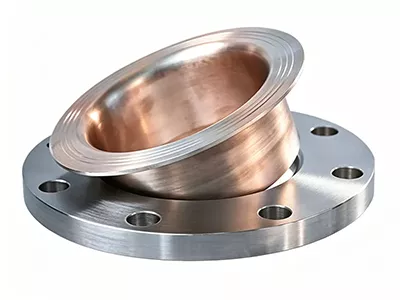
Copper nickel collar butt welded with copper nickel pipe and carbon steel loose backing flange for bolting force.
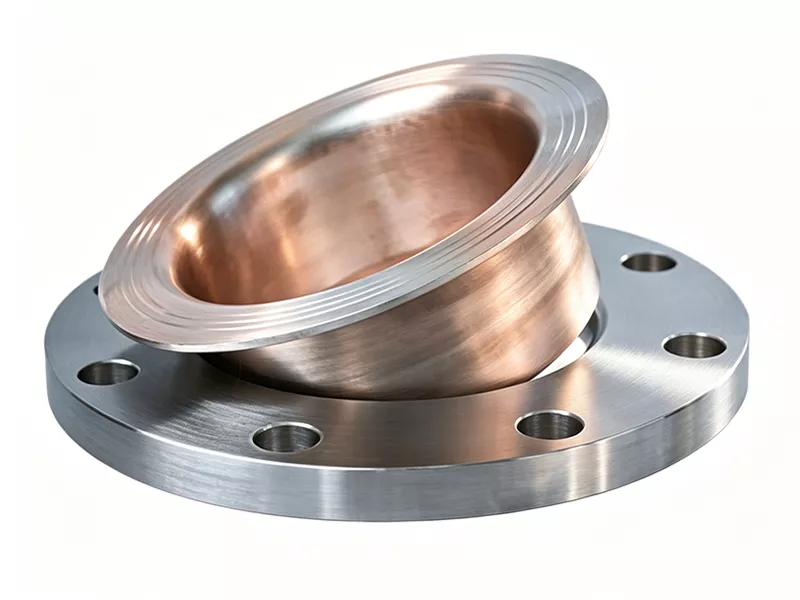
Composite Slip On Flange
Copper nickel slip on stub end with carbon steel backing flange for economical marine flange connections.
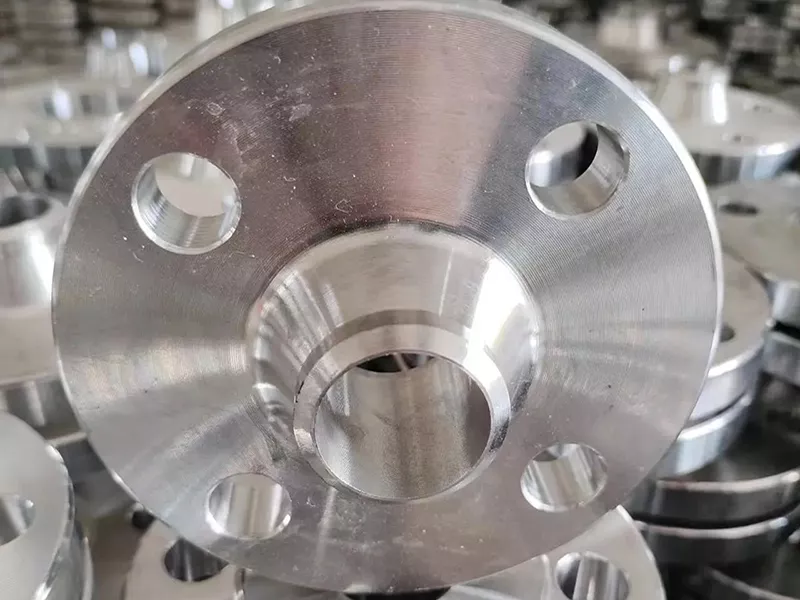
Weld Neck Flange
Long tapered hub, butt welded to pipe, suitable for stronger connections and higher pressure applications.
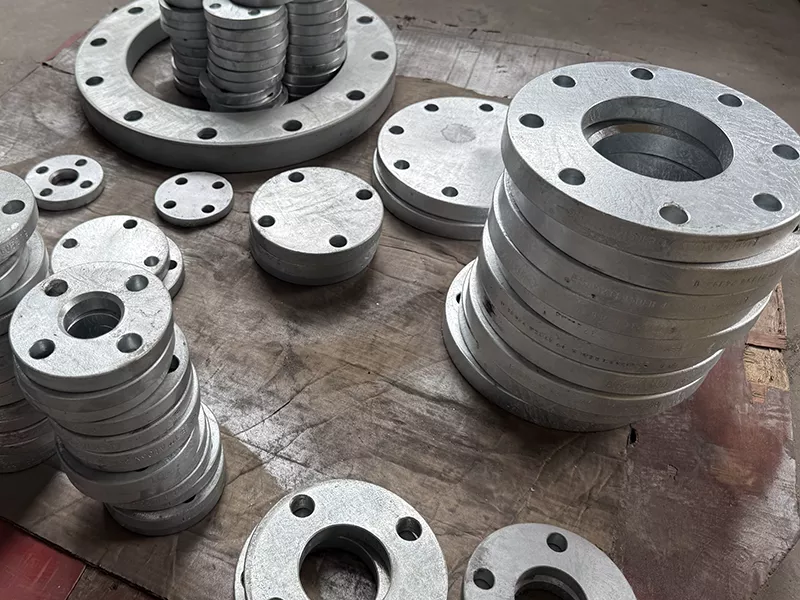
Slip On Flange
Slides over the pipe and is secured with fillet welds. Convenient for installation and alignment.
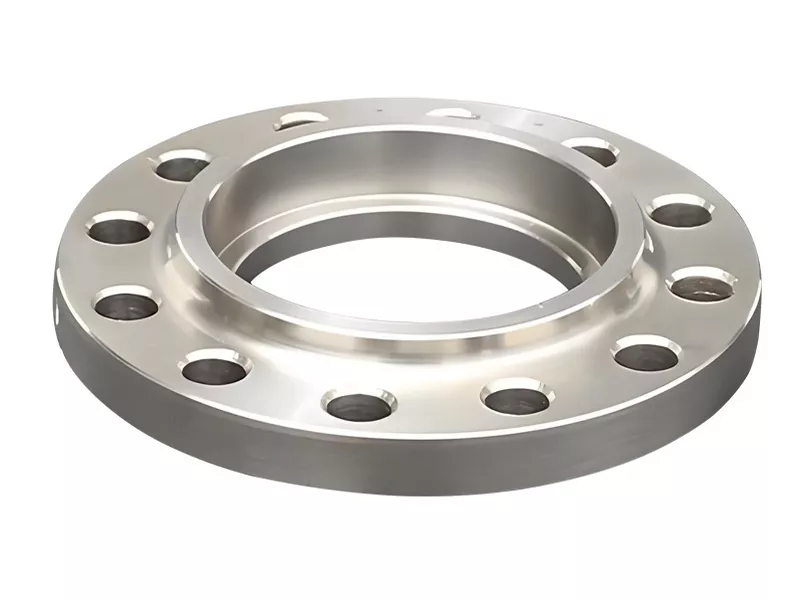
Socket Weld Flange
Pipe is inserted into the socket bore and welded outside. Suitable for small-size piping systems.
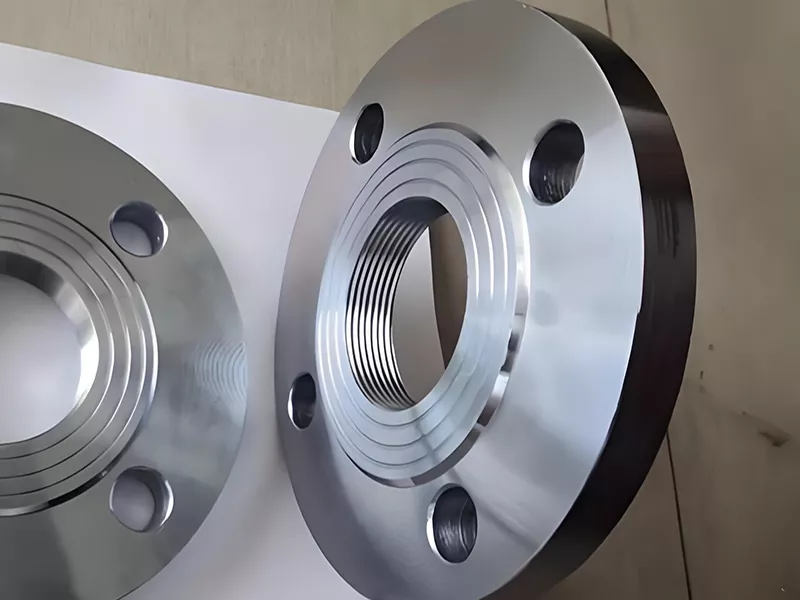
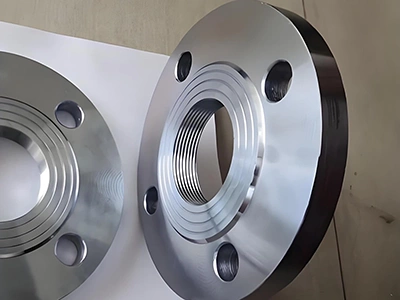
Threaded Flange
Non-welded flange connection with internal pipe thread, available with NPT or BSPT thread types.
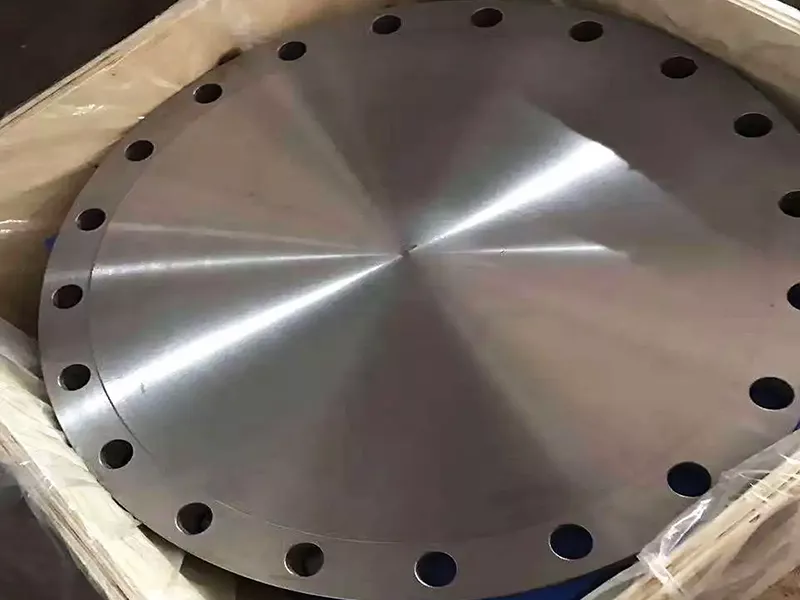
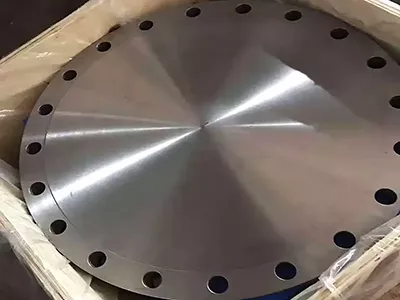
Blind Flange
Solid center flange used to close pipeline ends, valve openings, nozzles or reserved branch connections.
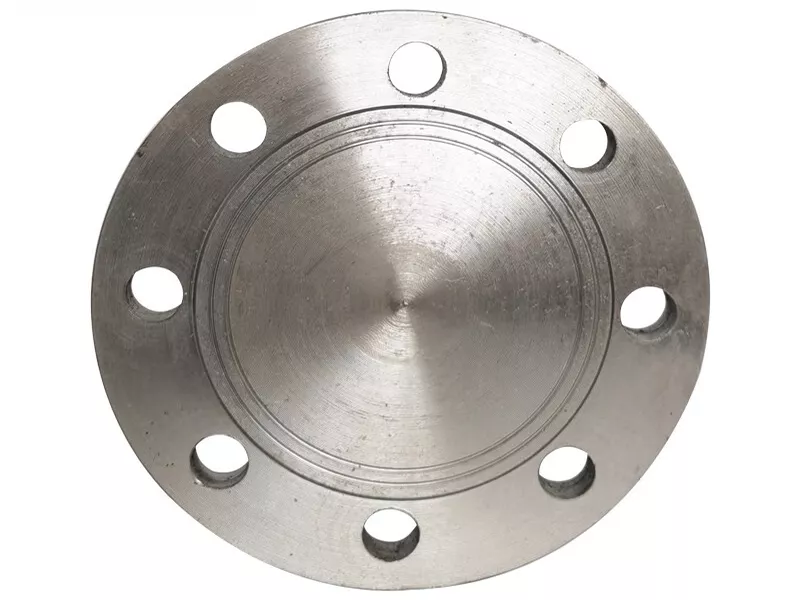
Composite Blind Flange
Steel and copper nickel composite blind flange available in ASME Class 150 and Class 300, RF or FF.
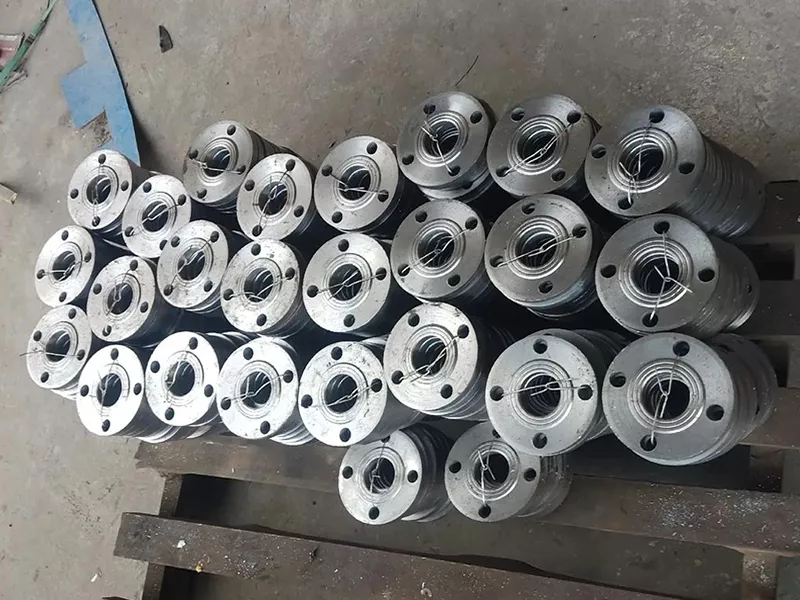
Backing Flange
Carbon steel loose flange used with copper nickel collar or stub end. It does not contact the medium.
Composite Weld Neck Flange
A composite weld neck flange is a cost-effective flange connection often used in low-pressure and non-critical marine piping systems.
Composition
- Copper nickel inner flanges/copper nickel collar/copper nickel stub end
- Carbon steel outer flange/carbon steel loose flange/backing flange.backing flange (loose flange)
Connection Method
The copper nickel inner flange is butt welded to the CuNi pipe and serves as the sealing component, while the carbon steel outer flange acts as a loose backing flange. The carbon steel outer flange can rotate freely during installation, allowing easy bolt hole alignment and reducing installation time on site.
In this design, the CuNi welding neck collar is the sealing surface. The role of the backing flange is to press the collar and provide the required bolting force. Because the collar blocks the medium, the backing flange does not contact the media.
This flange connection is applied in low-pressure and non-critical applications and is a cheap method of flanging, normally used in shipment and shipbuilding piping systems.
The collar is welded with copper nickel pipes, and the backing flange can be active. The collar is the sealing surface, while the backing flange presses the connection. Since the collar blocks the medium, the backing flange does not contact the media.
Composite Slip On Flange
Composite slip on flanges are engineered for copper nickel piping systems where corrosion resistance and cost efficiency are equally important. The design combines a copper nickel sealing component with a carbon steel backing flange, providing reliable performance in marine, offshore, desalination, and industrial applications.
Construction
- Copper Nickel Inner Flange – Also referred to as a copper nickel collar or stub end, this component is welded to the CuNi pipe and forms the corrosion-resistant sealing surface.
- Carbon Steel Backing Flange – A loose rotating flange that supplies the required bolt load while allowing easy bolt-hole alignment during installation.
Slip On vs. Composite Weld Neck Flange
Although both designs share the same composite construction, the pipe connection method is different.
- Composite Slip On Flange: Connected to the pipe using a slip-on fillet weld.
- Composite Weld Neck Flange: Connected by a full-penetration butt weld for higher structural strength.
During operation, only the copper nickel sealing component is exposed to seawater or other corrosive media, while the carbon steel backing flange remains outside the wetted area and serves solely as the mechanical support. This composite configuration significantly reduces material costs without sacrificing corrosion resistance, making it a practical solution for CuNi piping systems requiring long-term durability and simplified installation.
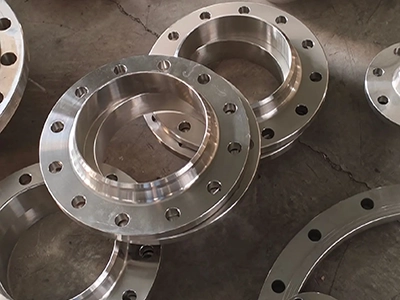
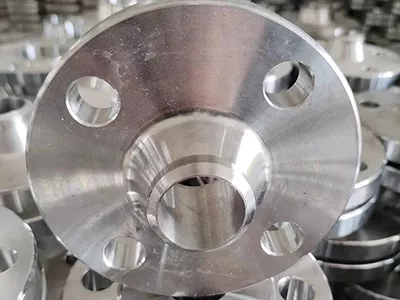
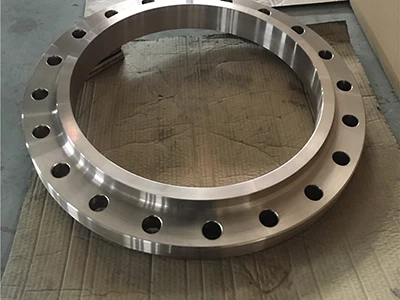
Copper Nickel Weld Neck Flanges
A copper nickel weld neck flange is joined to the pipe by butt welding at the neck. Its tapered hub helps spread mechanical load more evenly across the pipe and flange connection, making it a preferred choice for demanding piping lines exposed to pressure, vibration, or temperature changes.
Compared with slip on flanges, weld neck flanges provide a stronger and more continuous connection. The gradual transition from the flange hub to the pipe wall helps reduce local stress and supports better long-term performance, especially in critical copper nickel piping systems.
Key Advantages
- Butt weld design for a secure pipe-to-flange connection
- Tapered neck improves load distribution and joint strength
- Excellent resistance to seawater corrosion and biofouling
- Suitable for high-pressure and high-stress piping systems
- Helps maintain a smoother internal flow path
- Reliable performance in marine, shipbuilding, offshore, and desalination applications
Available Sealing Faces
Copper nickel weld neck flanges can be supplied with different sealing face options to meet pipeline design and gasket requirements.
- Flat Face (FF)
- Raised Face (RF)
Common Applications
- Seawater cooling systems
- Shipbuilding and marine engineering
- Offshore platforms
- Desalination plants
- Heat exchanger and condenser piping
These flanges are commonly supplied in copper nickel 90/10 and 70/30 materials and can be manufactured to project requirements such as ASME, ANSI, DIN, EN, JIS, or custom marine standards. The bore can be matched to the pipe size to help maintain smooth fluid flow and reduce turbulence inside the pipeline.
Copper Nickel Slip On Flanges
Copper nickel slip on flanges are designed to fit over the end of a pipe before welding, providing a practical flange connection for marine, offshore and seawater piping systems. Their compact hub design helps improve structural stability while keeping alignment and installation work relatively simple on site.
The bore of a Cu-Ni slip on flange is manufactured slightly larger than the pipe outside diameter, allowing the flange to slide into position with ease. After positioning, the flange is normally fixed by fillet welding on both the inside and outside edges, creating a reliable joint for low to medium pressure piping applications.
Compared with copper nickel weld neck flanges, slip on flanges are often preferred where installation speed, pipe fit-up flexibility and space efficiency are important.
Key Advantages
- Easy installation over the pipe end before welding
- Compact hub structure for improved support and stability
- Suitable for Cu-Ni 90/10 and Cu-Ni 70/30 piping systems
- Commonly welded on both sides for secure pipe connection
- Good choice for marine seawater and ship piping applications
- Available in multiple standards, sizes and pressure ratings
For piping systems exposed to severe pressure cycles, high temperature variation, vibration or repeated bending loads, flange type and welding details should be confirmed according to the project specification, pressure rating and applicable standards.
Copper Nickel Socket Weld Flanges
Copper nickel socket weld flanges are designed for compact, high-integrity connections in small-bore piping systems. A socket weld flange connects by inserting the pipe into the flange's socket and then fillet welding it in place. This design provides a more compact connection, better pipe alignment, and is ideal for small-diameter piping systems requiring high reliability.
- Ideal for small-bore copper nickel piping systems
- Socket bore design ensures accurate pipe alignment
- External fillet weld provides a secure flange-to-pipe joint
- Suitable for seawater, marine, offshore, and desalination service
- Available in CuNi 90/10 and CuNi 70/30 materials
- Compact design for installations with restricted space
- Optional internal seal weld helps minimize crevice corrosion risk
- Typically used for small nominal pipe sizes, subject to flange standard and project specification
Compared with standard slip-on designs, copper nickel socket weld flanges can offer improved resistance to vibration and cyclic loading when the correct weld gap, fit-up, and welding procedure are applied. For demanding service conditions, an additional internal seal weld may be specified to help reduce the risk of crevice corrosion caused by trapped liquid.
Copper Nickel Threaded Flanges
Copper nickel threaded flanges provide a mechanical pipe connection without field welding. The flange bore is machined with internal pipe threads, allowing it to be assembled directly with a matching threaded pipe or fitting.
What Is a Copper Nickel Threaded Flange?
A copper nickel threaded flange, also known as a screwed flange, is designed for piping systems where welding is not practical or not permitted on site. Instead of being welded to the pipe, the flange is tightened onto the external pipe thread to create a detachable connection.
Compared with weld neck, slip-on or socket weld flanges, threaded flanges are easier to install and remove. They are commonly selected for low-pressure utility lines, maintenance sections and auxiliary piping where quick assembly is required.
Available Thread Types
- NPT threaded copper nickel flanges
- BSPT threaded copper nickel flanges
Facing Options
- Raised Face threaded flanges
- Flat Face threaded flanges
Typical Applications
Copper nickel threaded flanges are suitable for non-critical piping services where corrosion resistance and convenient installation are both important. They are often used in low-pressure water lines, HVAC water systems, shipboard auxiliary systems, instrument connections and general service pipework.
| Connection Method | Internal thread connection, no welding required |
| Common Materials | Copper nickel 90/10 and 70/30 grades, depending on project requirements |
| Thread Standards | NPT, BSPT or customized thread forms upon request |
| Facing Types | Raised Face or Flat Face |
| Recommended Service | Low-pressure, non-hazardous and non-welded piping systems |
Usage Notes
Threaded flanges are not recommended for services with severe temperature cycling, vibration-sensitive conditions or high-risk media. To reduce the possibility of leakage, they should generally be avoided when the operating temperature is above 260°C or below -45°C.
They are also not suitable for flammable, explosive, highly toxic or extremely hazardous pipeline systems. For critical services, welded flange connections are usually preferred.
Copper Nickel Blind Flange
Copper nickel blind flanges are used to block or close pipeline ends, valve openings, pressure vessel nozzles or branch connections.
The middle of the blind flange is solid and surrounded by bolt holes. Copper nickel blind flanges can be either flat face or raised face.
In short, the purpose of copper nickel blind flanges is to block the copper nickel pipeline so the material inside the pipe will not overflow. They are generally used at the end of a water supply branch or at reserved pipeline ends.
In some cases, a temporary part of the pipe segment may be blocked temporarily. Some systems use valves, while some unused original pipe sections are closed with copper nickel blind flanges.
Common Uses
- Pipeline end closure
- Temporary pipeline blocking
- Future extension point
- Inspection opening
- Pressure testing
- Reserved branch connection
Available Types
- Copper nickel blind flange
- Steel and copper nickel composite blind flange
- Flat face blind flange
- Raised face blind flange
- ASME B16.5 Class 150 blind flange
- ASME B16.5 Class 300 blind flange
HC Copper Nickel Flange Product Rang
HC supplies copper nickel flanges, CuNi stub ends, steel backing flanges and composite blind flanges for marine, offshore, shipbuilding and seawater piping systems. Our products are manufactured according to DIN, EEMUA and ASME standards, including DIN 86037, DIN 86033, EEMUA 234 and ASME B16.5 Class 150 / Class 300.
| Product Type | Available Standard / Class / Size Range |
| Copper Nickel Weld Neck Inner Flange / Inner Flange | DIN 86037 |
| Steel Outer Flange / Steel Backing Flange | DIN 86037, DN20-DN150 PN10 / PN16, DN175-DN900 PN10 |
| Copper Nickel Inner Flange / CuNi Stub End | EEMUA 234 |
| Steel Flange / Backing Flange for CuNi Stub End | EEMUA 234 Class 150 |
| Copper Nickel Slip On Inner Flange / Slip On Stub End | EEMUA 234 |
| Steel Backing Flange for Slip On Stub End | EEMUA 234 Class 150 |
| Copper Nickel Weld Neck Flange | EEMUA 234, ASME B16.5 Class 150, ASME B16.5 Class 300 |
| Copper Nickel Slip On Flange | DIN 86033, EEMUA 234, ASME B16.5 Class 150, ASME B16.5 Class 300 |
| Copper Nickel Socket Weld Flange | ASME B16.5 Class 150, ASME B16.5 Class 300 |
| Copper Nickel Threaded Flange / Inner Threaded Flange | ASME B16.5 Class 150, ASME B16.5 Class 300 |
| Copper Nickel Blind Flange | ASME B16.5 Class 150, ASME B16.5 Class 300 |
| Steel and Copper Nickel Composite Blind Flange | ASME B16.5 Class 150 RF, Class 300 RF, Class 150 FF, Class 300 FF |
Note: Copper nickel flange dimensions, material grades, pressure ratings, sealing faces, surface treatment, marking, inspection requirements and export packing can be customized according to project specifications. Common material options include CuNi 90/10 and CuNi 70/30 for seawater, marine and offshore piping applications.
Copper Nickel Flange Standards We Manufacture
Our copper nickel flanges are produced for marine, offshore and industrial piping projects where reliable seawater corrosion resistance, dimensional accuracy and long service life are required. Common materials include CuNi 90/10 and CuNi 70/30, with flange options available to match international project specifications.
DIN Copper Nickel Flanges
- DIN 86037
- DIN 86033
DIN standard copper nickel flanges are frequently specified for shipbuilding, vessel repair and marine piping networks. They are commonly used in seawater cooling, ballast, bilge and other onboard service lines.
EEMUA Copper Nickel Flanges
- EEMUA 234
- EEMUA 234 Class 150
EEMUA 234 flanges are designed for demanding seawater applications, including offshore platforms, desalination plants, coastal facilities and marine engineering systems requiring dependable CuNi pipe connections.
ASME B16.5 Copper Nickel Flanges
- ASME B16.5 Class 150
- ASME B16.5 Class 300
- Raised Face Flanges
- Flat Face Flanges
ASME copper nickel flanges are suitable for international piping projects built to ANSI / ASME requirements. They are available in different pressure classes and facing types to support reliable installation in marine and industrial systems.
Material Options for Copper Nickel Flanges
Our copper nickel flanges are available in CuNi 90/10, CuNi 70/30, and composite designs with carbon steel backing flanges.
CuNi 90/10 Flanges
CuNi 90/10, also known as C70600, is a popular choice for seawater service due to its balanced performance, stable corrosion resistance, and good durability in marine environments. It is widely used for seawater pipelines, condensers, heat exchangers, desalination systems, and shipboard piping where reliable service life and low maintenance are important.
CuNi 70/30 Flanges
CuNi 70/30, commonly referred to as C71500, offers higher mechanical strength and enhanced resistance in harsher seawater conditions. This alloy is often specified for offshore platforms, high-velocity seawater systems, naval vessels, and demanding marine applications where greater resistance to erosion, corrosion, and pressure is required.
Composite Flanges with Carbon Steel Backing
For projects that require both corrosion resistance and cost efficiency, composite copper nickel flanges with carbon steel backing flanges are available. This construction helps reduce material cost while maintaining copper nickel contact surfaces for seawater exposure, making it a practical solution for large-scale marine and offshore piping systems.
Copper Nickel Flanges Chemical Composition
90/10 (UNS C70600) Copper Nickel Flanges Chemical Composition
| KME CuNi90/10 | DIN 17664 2.0882 | BS 2871 CN102 | ASTM B466 C70600 | JIS H3300 C7060T | DIN 86019 2.1972 | EEMUA 234 UNS 7060X | GB/T 5231 BFe10-1.6-1 | |
| Ni% | 10.0-11.0 | 9.0-11.0 | 10.0-11.0 | 9.0-11.0 | 9.0-11.0 | 9.0-11.0 | 10.0-11.0 | 9.0-11.0 |
| Fe% | 1.5-1.8 | 1.0-2.0 | 1.0-2.0 | 1.0-1.8 | 1.0-1.8 | 1.5-1.8 | 1.5-2.0 | 1.5-1.8 |
| Mn% | 0.6-1.0 | 0.5-1.0 | 0.5-1.0 | max.1.0 | 0.2-1.0 | 0.5-1.0 | 0.5-1.0 | 0.5-1.0 |
| C% | max.0.05 | max.0.05 | max.0.05 | max.0.05 | max.0.05 | max.0.05 | max.0.05 | |
| Pb% | max.0.01 | max.0.03 | max.0.01 | max.0.02 | max.0.05 | max.0.01 | max.0.01 | max.0.03 |
| S% | max.0.005 | max.0.02 | max.0.05 | max.0.02 | max.0.005 | max.0.02 | max.0.01 | |
| P% | max.0.02 | max.0.02 | max.0.02 | max.0.02 | max.0.02 | max.0.02 | ||
| Zn% | max.0.05 | max.0.50 | max.0.50 | max.0.50 | max.0.05 | max.0.20 | max.0.20 | |
| Other | max.0.20 | max.0.30 | max.0.20 | max.0.30 | max.0.40 | |||
| Cu% | rem. | rem. | rem. | rem. | +Ni+Fe+Mn min99.5 | rem. | rem. | rem. |
70/30 (UNS C71500) Copper Nickel Flanges Chemical Composition
| KME CuNi70/30 | DIN 176642.0882 | BS 2871 CN107 | ASTM B466C71500 | JIS H3300C7150T | |
| Ni% | 30.0-32.0 | 30.0-32.0 | 30.0-32.0 | 29.0-33.0 | 29.0-33.0 |
| Fe% | 0.47-0.7 | 0.4-1.0 | 0.4-1.0 | 0.4-1.0 | 0.4-1.0 |
| Mn% | 0.5-1.0 | 0.5-1.5 | 0.5-1.5 | max.1.0 | 0.2-1.0 |
| C% | max.0.04 | max.0.05 | max.0.06 | max.0.05 | |
| Pb% | max.0.01 | max.0.03 | max.0.01 | max.0.02 | max.0.05 |
| S% | max.0.01 | max.0.02 | max.0.08 | max.0.02 | |
| P% | max.0.02 | max.0.02 | max.0.02 | ||
| Zn% | max.0.20 | max.0.50 | max.0.50 | max.0.50 | |
| Other | max.0.30 | max.0.30 | |||
| Cu% | rem. | rem. | rem. | rem. | +Ni+Fe+Mn min99.5 |
How to Choose Copper Nickel Flanges for Your Piping System
The right copper nickel flange should be selected according to pipe size, pressure class, welding method, service medium, installation space and operating environment. For seawater, shipbuilding and offshore piping systems, flange type and material grade must match the actual working conditions.
Weld Neck Copper Nickel Flanges
Weld neck flanges are recommended for demanding Cu-Ni piping systems where strength, pressure resistance and long-term sealing reliability are important.
- Suitable for high-pressure or high-temperature service
- Preferred for marine, offshore and process piping with vibration
- Ideal when full penetration butt welding is required
- Helps reduce stress concentration at the flange connection
- Commonly used in critical 90/10 and 70/30 copper nickel pipelines
Slip On Copper Nickel Flanges
Slip on flanges are a practical option when installation speed, alignment flexibility and economical fabrication are key project requirements.
- Best suited for low to moderate pressure piping systems
- Easier to fit and align during site installation
- Requires fillet welding on the inside and outside of the flange
- Often used in seawater cooling, ballast and utility lines
- A cost-effective choice for non-critical copper nickel pipework
Socket Weld Copper Nickel Flanges
Socket weld flanges are typically selected for smaller diameter copper nickel piping where compact design and secure welded joints are required.
- Recommended for small-bore Cu-Ni pipe connections
- Useful where installation space is limited
- Provides better joint strength than simple threaded connections
- Suitable for systems requiring stable sealing performance
- Often applied in auxiliary marine and instrumentation lines
Threaded Copper Nickel Flanges
Threaded flanges are used when welding is not practical or permitted. They are mainly applied in low-pressure, non-critical piping arrangements.
- Suitable for locations where hot work is restricted
- Used in low-pressure copper nickel piping systems
- Appropriate for non-toxic and non-hazardous media
- Allows easier dismantling, repair and replacement
- Not normally recommended for severe vibration or cyclic loading
Blind Copper Nickel Flanges
Blind flanges are designed to seal the end of a copper nickel pipeline, nozzle or valve connection. They are also useful for inspection and pressure testing.
- Used to close pipe ends or unused branch connections
- Suitable for temporary or permanent line isolation
- Helps provide access for maintenance, flushing or testing
- Available for different pressure ratings and flange standards
- Common in shipboard seawater and offshore piping networks
Composite Copper Nickel Flanges
Composite flanges combine a copper nickel stub end or sealing part with a separate backing flange. This design reduces material cost while keeping corrosion resistance where it is needed.
- Recommended when only wetted surfaces require Cu-Ni alloy
- Helps lower total flange cost in large piping projects
- Backing flange remains outside the corrosive medium
- Provides easier bolt-hole alignment during installation
- Commonly used in low-pressure marine and seawater systems
Applications of Copper Nickel Flanges
Copper nickel flanges are trusted in seawater service, marine engineering, offshore piping and heat transfer systems where dependable corrosion resistance, low maintenance and long service life are essential.
Marine & Shipbuilding Systems
Cu-Ni flanges are widely used on commercial vessels, naval ships and repair projects because they perform well in continuous seawater circulation and onboard utility systems.
- Seawater piping systems
- Ballast and bilge water lines
- Fire-fighting water systems
- Drainage and cooling water networks
Offshore, Coastal & Desalination Projects
For offshore platforms and coastal facilities, copper nickel pipe flanges help maintain stable performance in chloride-rich environments and reduce the risk of premature connection failure.
- Offshore oil and gas platforms
- Seawater intake and discharge lines
- Coastal industrial water systems
- Desalination plant piping connections
Pumps, Valves & Heat Transfer Equipment
Copper nickel flanges provide secure, corrosion-resistant joints for critical equipment where sealing reliability and easy maintenance are required.
- Heat exchanger flange connections
- Condenser inlet and outlet connections
- Pump suction and discharge connections
- Valve, strainer and manifold connections
Why Choose HC Copper Nickel Flanges
HC supplies copper nickel flanges for shipbuilding, offshore and industrial seawater systems.
Supply Advantages
- Complete flange types available
- DIN, EEMUA and ASME standards supported
- CuNi 90/10 and CuNi 70/30 materials available
- Composite flange solutions for cost saving
- Suitable for marine and seawater service
- Custom production according to drawings
- Inspection and documentation support
- Export packing for long-distance shipment
Project Support
We understand that marine piping projects require not only correct dimensions, but also reliable materials, stable sealing surfaces and clear standard compliance. HC can support flange selection according to pipe size, pressure class, sealing face, material grade and project documentation requirements.
Quality Control and Inspection
To ensure stable performance in marine piping systems, copper nickel flanges can be inspected according to project requirements.
Common Inspection Items
- Material verification
- Dimension inspection
- Flange thickness inspection
- Bolt hole inspection
- Sealing surface inspection
- Visual inspection
- Marking inspection
- Packing inspection
- Test certificates when required
Available Documents
- Material Test Certificate
- EN 10204 3.1 certificate if required
- Dimension report
- Packing list
- Certificate of origin
- Project-specific inspection documents
Information Required for Quotation
To quote copper nickel flanges accurately, please provide the following details.
Required Details
- Flange type
- Standard
- Size / DN / NPS
- Pressure rating / class
- Material grade
- Sealing face type
- Quantity
- Pipe specification if matching is required
- Drawing if customized
- Inspection or certificate requirements
- Delivery destination
Looking for Copper Nickel Flanges?
Send us your drawings, standards, sizes or seawater piping application
Get a QuoteFAQ – Copper Nickel Flanges
What are copper nickel flanges used for?
Copper nickel flanges are used to connect copper nickel pipes, valves, pumps, and equipment in seawater, marine, offshore, and industrial piping systems. They are widely selected for their excellent corrosion resistance, long service life, and reliable performance in seawater applications.
What is the difference between a weld neck flange and a slip on flange?
A weld neck flange is butt welded to the pipe and features a tapered hub that provides better stress distribution, making it suitable for higher-pressure and critical applications. A slip on flange slides over the pipe and is secured by fillet welds, offering easier installation for general service.
What is a composite copper nickel flange?
A composite copper nickel flange combines a copper nickel collar or stub end with a carbon steel backing flange. The copper nickel component forms the sealing surface and contacts the medium, while the carbon steel backing flange provides bolting strength, reducing overall material cost.
Does the carbon steel backing flange contact seawater?
No. In a properly assembled composite flange, the copper nickel collar or stub end isolates the process medium. The carbon steel backing flange only supplies mechanical clamping force and does not come into contact with seawater or other conveyed fluids.
What standards are available for copper nickel flanges?
HC supplies copper nickel flanges manufactured according to DIN 86037, DIN 86033, EEMUA 234, and ASME B16.5 standards. Products are available in Class 150 and Class 300 pressure ratings and can be customized to project requirements.
Can copper nickel threaded flanges be used without welding?
Yes. Copper nickel threaded flanges connect directly to threaded pipes without welding. They are generally recommended for low-pressure, low-temperature, and non-critical piping systems where welding is not practical.
Are copper nickel blind flanges available?
Yes. HC manufactures both solid copper nickel blind flanges and steel–copper nickel composite blind flanges in ASME B16.5 Class 150 and Class 300, with raised face (RF) and flat face (FF) sealing options.
Which material is better, CuNi 90/10 or CuNi 70/30?
CuNi 90/10 is the standard choice for most seawater piping systems because of its excellent corrosion resistance and cost-effectiveness. CuNi 70/30 offers higher strength and superior resistance in more severe seawater environments, making it suitable for high-flow, high-velocity, or more demanding marine applications.
The following Copper Nickel Flanges may interest you
Further reading: Copper Nickel PipesCopper Nickel ElbowsCopper Nickel TeesCopper Nickel Pipe CapCopper Nickel ReducerCopper Nickel Threaded Pipe Fittings